

 Book a call
AI content labeling from August 2026: what do the new rules mean for e-shops?
07.08.2026
« Back to articlesLabelling AI-generated content from August 2026: what does it mean for e-shops?
From August 2026, new EU rules on labelling content created using artificial intelligence apply. What exactly do they mean for e-shops, and which AI-generated content actually needs to be labelled?
New rules for AI-generated content
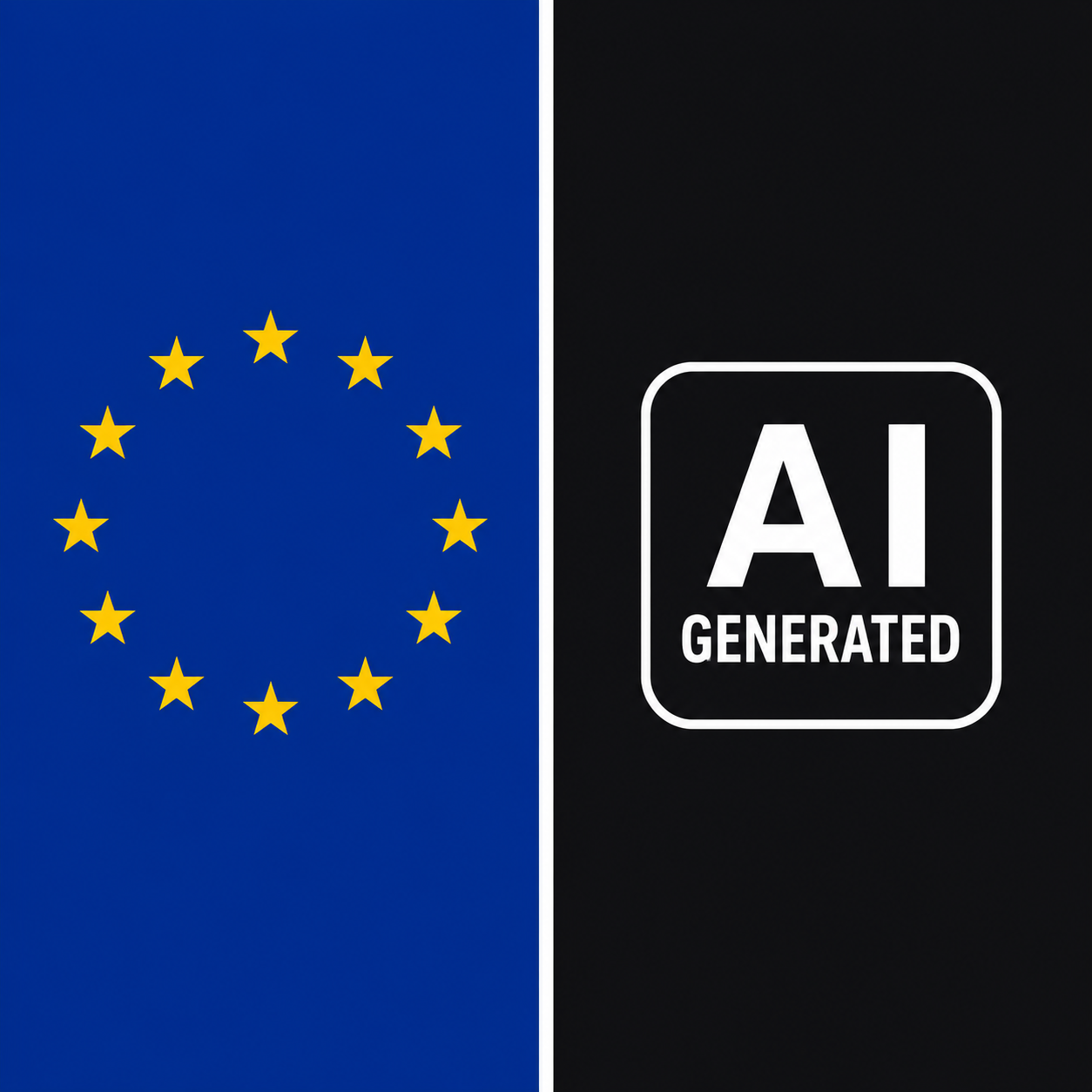
Artificial intelligence is now a common part of creating texts, images and other content. From 2 August 2026 , however, new transparency rules under Article 50 of the AI Act began to apply in the European Union.
The rules focus primarily on situations where a person could mistake AI-generated content for something real or where AI informs the public about important societal issues.
Does an e-shop have to label every product description created using AI?
No. The AI Act does not introduce a general rule requiring every text created using AI to contain a label such as „Created using AI“.
The obligation to visibly label AI-generated text applies to texts published for the purpose of informing the public about matters of public interest. The European Commission includes, for example, politics, public safety, public health, environmental protection, or significant economic, scientific or cultural developments. Ordinary product descriptions, category descriptions or marketing texts therefore generally do not fall under this specific obligation, provided that their purpose is not to inform the public about a matter of public interest.


AI images deserve greater attention
The situation is somewhat different with images. The AI Act uses the term deepfake not only for fake photographs of people. It can also refer to an AI-generated or modified image of an existing object, place, event or other entity if it may appear to a person to be authentic or truthful.
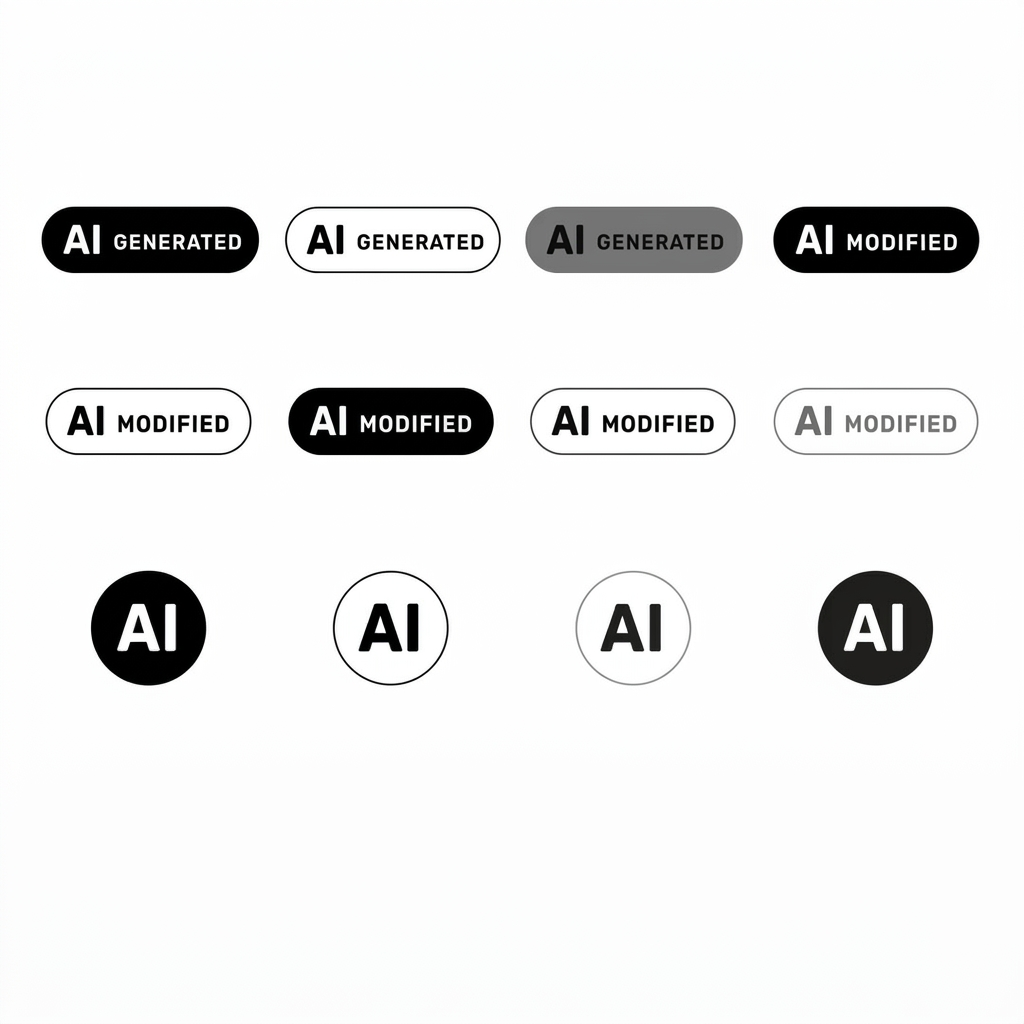
For e-shops, this may be important, for example, when creating realistic lifestyle photographs using AI. As one example, the European Commission mentions an authentic photograph of an empty apartment that was subsequently realistically furnished with furniture using AI. Such content may fall within the category of partially AI-modified content that needs to be transparently labelled. However, the specific context and whether the customer may regard the resulting image as an authentic depiction of reality are also always relevant.
What does this mean for e-shops?
If you use AI to create ordinary product descriptions, category descriptions or other e-shop content, the new legislation does not automatically mean that you need to add information to every text stating that it was created using AI.
Particular attention should be paid primarily to realistic AI-generated images and other content that a customer could regard as an authentic photograph of a real product, place or situation. For such content, it is necessary to assess whether it meets the definition of a deepfake and whether it is therefore necessary to inform the customer that AI was used.
According to the European Commission, content generated and published before 2 August 2026 does not need to be labelled retroactively.


Thinking about Pobo? Let us show it to you.
Book a 30-minute call with Lenka. She will show you how Pobo works, what it is good for and how much writing it takes off your hands.
Book a call